
 ABOUT Bharat Aawaz | BMA
 Bharat Aawaz
History of Journalism in Delhi & NCR: A Mirror of National Voices and Media Movements
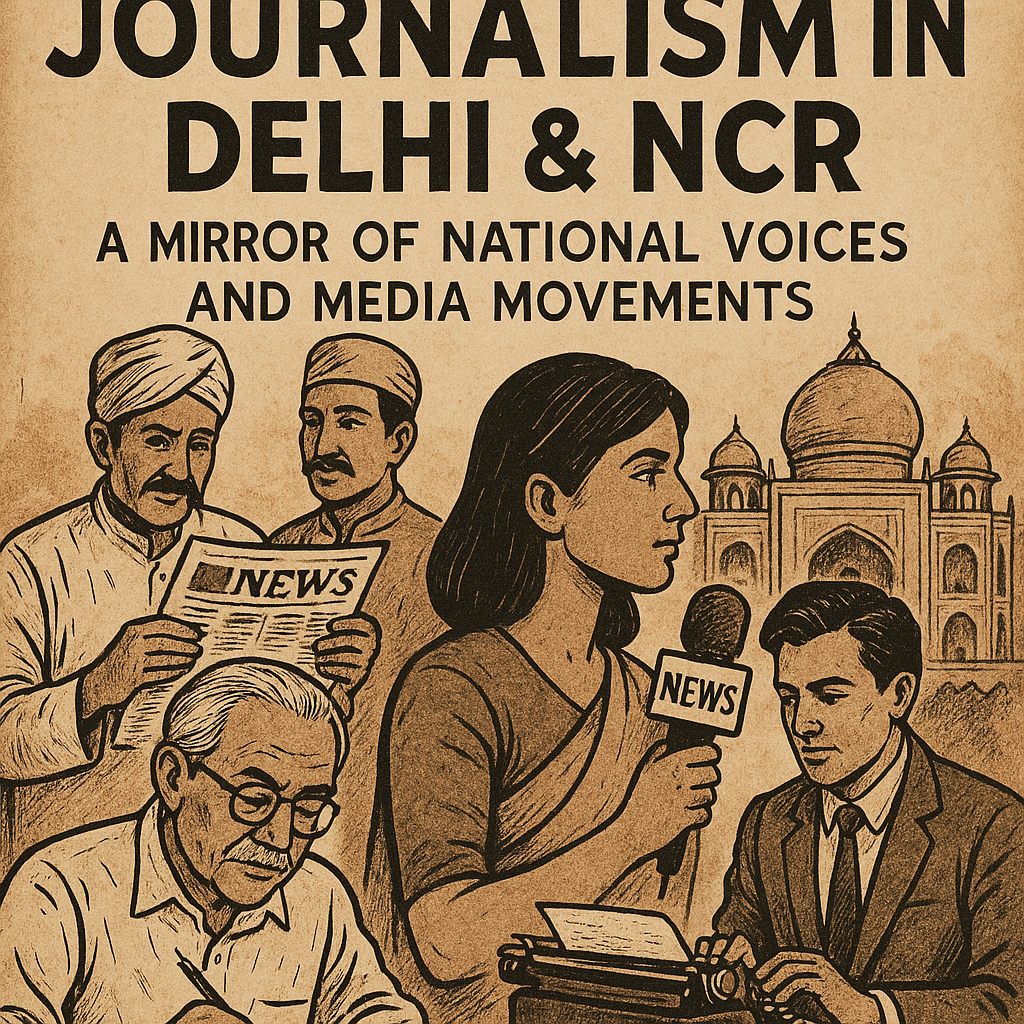
History of Journalism in Delhi & NCR: A Mirror of National Voices and Media Movements
The Birthplace of Political Journalism
The history of journalism in Delhi-NCR (National Capital Region) is intrinsically tied to the political evolution of India. As the capital of British India post-1911, and later Independent India, Delhi became the epicenter for journalistic activity.
The seeds of political journalism were sown in the late 19th and early 20th centuries. English and vernacular newspapers, often edited by nationalist leaders, started gaining traction. Major national newspapers like The Hindustan Times (founded in 1924 in Delhi) and The Indian Express played a critical role in echoing voices of dissent during colonial rule.
Early Urdu publications like Milap and Tej from Delhi inspired political awareness and debate, making the city a nerve center for resistance journalism.
Journalism During the Freedom Movement
Delhi’s press was a battlefield of ideas during the independence movement:
-
Newspapers became the voice of freedom fighters, printing speeches by Gandhi, Nehru, and Patel.
-
Underground and banned pamphlets circulated in the alleys of Chandni Chowk and Daryaganj.
-
Vernacular press in Urdu, Hindi, and Punjabi played a pivotal role in mobilizing protests, satyagraha, and mass awakenings.
Colonial censors tried to silence them with the Press Act of 1910, but Delhi's journalists adapted—using symbolism, satire, and coded language to spread their message.
Post-Independence: Capital of National Media
After 1947, Delhi quickly transformed into the media capital of India:
-
National dailies like The Times of India, Navbharat Times, and Jansatta set up strong editorial bases in the capital.
-
The Press Trust of India (PTI), founded in 1949, headquartered in Delhi, became India's largest news agency.
-
Doordarshan Delhi, launched in 1959, was the first television broadcaster in India—bringing news to millions.
-
All India Radio’s flagship news programs, Samachar and News at Nine, were produced in Delhi.
Delhi emerged as the media policy hub, hosting the Press Council of India, Editors Guild, and Ministry of Information & Broadcasting.
Media in Democracy and Activism
From the Emergency (1975–77), when censorship gripped the nation, to the anti-corruption India Against Corruption movement (2011), Delhi’s media has consistently stood at the heart of democratic action.
-
During the Emergency, only a few papers like The Indian Express dared to protest by leaving editorials blank.
-
The rise of independent magazines like Tehelka and Outlook in the 90s and 2000s added critical depth to Indian journalism, many headquartered in Delhi.
-
RTI activism, protests at Jantar Mantar, and public interest litigations were widely covered by Delhi-based investigative reporters.
Digital Disruption and Media Hubs
Today, Delhi-NCR is not just the seat of power but the nerve center of digital journalism:
-
Home to major TV news studios: NDTV, India Today, Aaj Tak, Zee News, and Republic Bharat have headquarters or bureaus in Delhi-NCR.
-
Online portals like Scroll.in, The Wire, The Quint, and NewsLaundry emerged from Delhi, redefining independent digital journalism.
-
Social media influencers, YouTubers, and digital news desks operate from Noida, Gurugram, and central Delhi.
At the same time, concerns over fake news, propaganda, troll armies, and media-business-politics entanglement have grown.
Challenges and Future
-
While Delhi remains India’s journalistic heartbeat, it also witnesses the highest number of defamation cases, FIRs against journalists, and political pressure campaigns.
-
The safety of field reporters, especially during events like the Delhi riots (2020), continues to raise concerns.
-
Yet, Delhi’s journalists persist—fact-checking, investigating, and storytelling—amid an increasingly polarized environment.
🔔 Conclusion
Delhi & NCR’s media history is not just a chronicle of publications—it’s the story of India’s democratic journey. From the freedom struggle to the digital age, this region has birthed revolutions in thought, accountability, and public discourse.
Its future lies in preserving press freedom, embracing ethics in journalism, and ensuring the media remains a watchdog not a lapdog of democracy.