


• Sunday Kadha Em Special Today Mi Home Lo Comment Cheyandi
    సండే కదా ఎం స్పెషల్ టుడే మీ హోమ్ లో కామెంట్ చేయండి
    #Sivanagendra #Bharataawaz #Media #Press #Reporter #Incharge #Tq
    Sunday Kadha Em Special Today Mi Home Lo Comment Cheyandi సండే కదా ఎం స్పెషల్ టుడే మీ హోమ్ లో కామెంట్ చేయండి #Sivanagendra #Bharataawaz #Media #Press #Reporter #Incharge #Tq
    0 Comments 0 Shares 2K Views 0 Reviews
  • *The Question Isn't *What* Your Title Is. The Question Is *What* You Do With It.**

    You are a Reporter, a Journalist, a Coordinator. But let's ask a more fundamental question: When was the last time your question made power tremble? When did a Minister, an MP, an Officer pause and realize they were truly answerable to the people you represent?

    The sacred duty of the Press is to be the voice of the people and a mirror to power. But we are surrounded by the ghosts of failed promises, the cunning of empty manifestos, and the deafening silence where accountability should be.

    **Are we really doing our job? Or are we just reporting the excuses?**

    At Bharat Aawaz, we don't just ask the question. We build the platform for the answer. We believe in **“संवाद से समाधान” (Samvad Se Samadhan)** — moving from mere talk to tangible transformation.

    **Imagine this. Not as a dream, but as our blueprint for a revolution in accountability:**

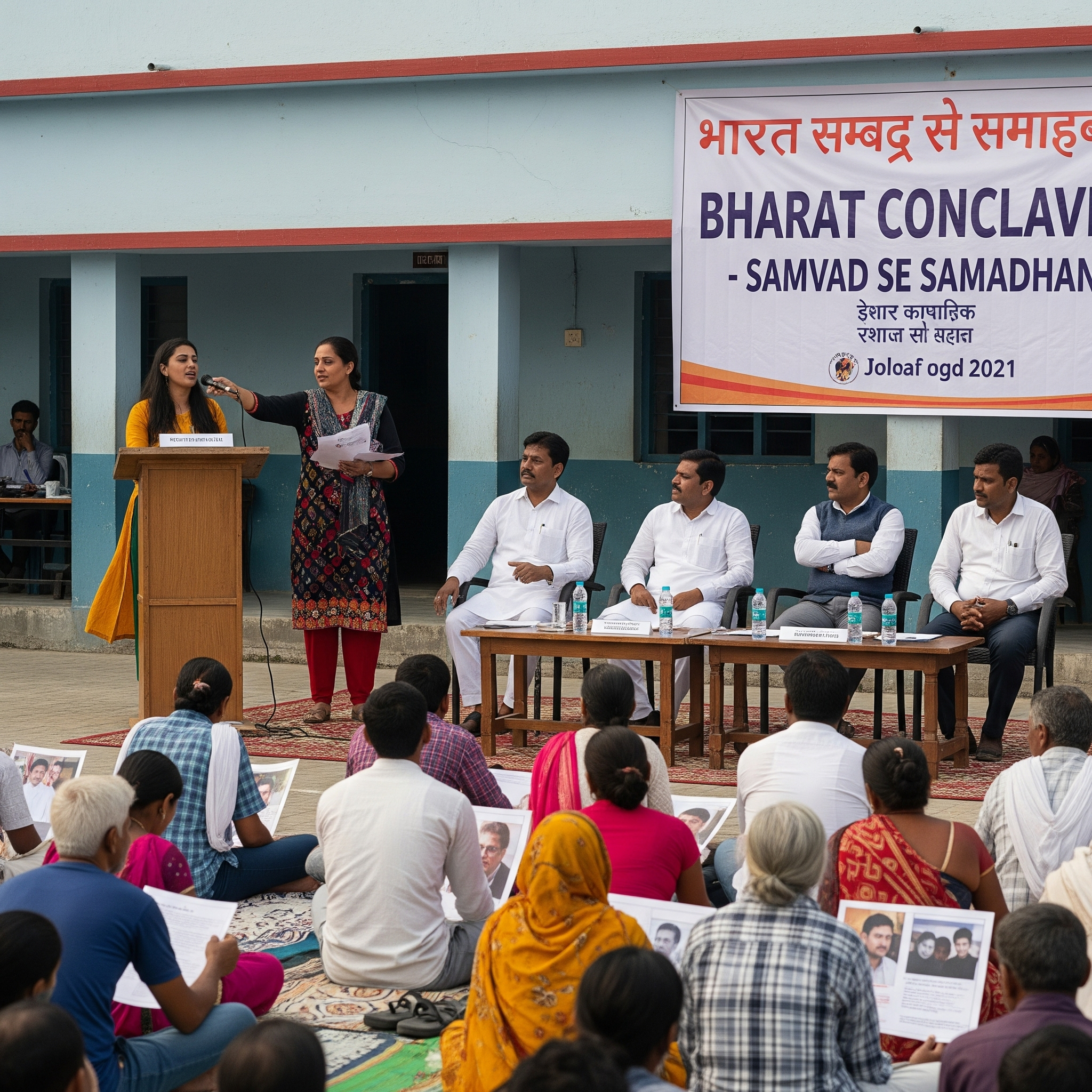
    You will not just 'request' an interview. You will establish **The People's Forum** in your constituency. An arena where power doesn't lecture, it listens. Where the agenda is not set by the politician, but by the public.

    In this arena:
    * You will summon the sitting MLA or MP, and alongside them, every leader who contested for the people's vote.
    * You will call upon every key officer responsible for the constituency's welfare.
    * You will come armed not with opinions, but with undeniable facts—your ammunition will be RTI replies, documented evidence, and official records.
    * The people are not spectators; they are the jury. You will bring forward every citizen with a grievance, a problem, or a question.
    * The venue will not be a sterile conference room, but the heart of the community—a local school on a Sunday, where every citizen has a front-row seat to democracy.

    Every three months, this People's Forum will conduct a public audit. We will ask:
    * What was promised for the last 90 days?
    * What was delivered? What is pending, and why?
    * What is the concrete, written plan for the next 90 days?

    Everything will be concluded in writing. Not a political promise, but a public commitment. This is the **Real Performance Review**, conducted by the people, for the people. This is how we make our legislative and executive systems truly answerable.

    Each of these local forums is a tributary, feeding the great river of change that is the national **Bharat Conclave.**

    So, we ask you again. Are you just a reporter?

    Or are you ready to be an architect of accountability? With Bharat Aawaz, you are the living embodiment of Samvad Se Samadhan.
    *The Question Isn't *What* Your Title Is. The Question Is *What* You Do With It.** You are a Reporter, a Journalist, a Coordinator. But let's ask a more fundamental question: When was the last time your question made power tremble? When did a Minister, an MP, an Officer pause and realize they were truly answerable to the people you represent? The sacred duty of the Press is to be the voice of the people and a mirror to power. But we are surrounded by the ghosts of failed promises, the cunning of empty manifestos, and the deafening silence where accountability should be. **Are we really doing our job? Or are we just reporting the excuses?** At Bharat Aawaz, we don't just ask the question. We build the platform for the answer. We believe in **“संवाद से समाधान” (Samvad Se Samadhan)** — moving from mere talk to tangible transformation. **Imagine this. Not as a dream, but as our blueprint for a revolution in accountability:** You will not just 'request' an interview. You will establish **The People's Forum** in your constituency. An arena where power doesn't lecture, it listens. Where the agenda is not set by the politician, but by the public. In this arena: * You will summon the sitting MLA or MP, and alongside them, every leader who contested for the people's vote. * You will call upon every key officer responsible for the constituency's welfare. * You will come armed not with opinions, but with undeniable facts—your ammunition will be RTI replies, documented evidence, and official records. * The people are not spectators; they are the jury. You will bring forward every citizen with a grievance, a problem, or a question. * The venue will not be a sterile conference room, but the heart of the community—a local school on a Sunday, where every citizen has a front-row seat to democracy. Every three months, this People's Forum will conduct a public audit. We will ask: * What was promised for the last 90 days? * What was delivered? What is pending, and why? * What is the concrete, written plan for the next 90 days? Everything will be concluded in writing. Not a political promise, but a public commitment. This is the **Real Performance Review**, conducted by the people, for the people. This is how we make our legislative and executive systems truly answerable. Each of these local forums is a tributary, feeding the great river of change that is the national **Bharat Conclave.** So, we ask you again. Are you just a reporter? Or are you ready to be an architect of accountability? With Bharat Aawaz, you are the living embodiment of Samvad Se Samadhan.
    Love
    1
    0 Comments 0 Shares 4K Views 0 Reviews
  • Be a Leader! Not Just a Reporter. You're the Face of the Nation.
    Be the Voice of Poor, Deprived and Depressed.
    https://youtu.be/Z9vlwvItKwo?si=PjRCMzi6TUwzeTcd
    Be a Leader! Not Just a Reporter. You're the Face of the Nation. Be the Voice of Poor, Deprived and Depressed. https://youtu.be/Z9vlwvItKwo?si=PjRCMzi6TUwzeTcd
    0 Comments 0 Shares 824 Views 0 Reviews
  • The Voice Listens

    Anjali clutched her journalism degree like a shield that had failed her. In the gleaming, high-decibel newsrooms of Delhi where she had interned, truth was a commodity, traded for ratings and shaped by the highest bidder. Stories that mattered were buried under an avalanche of celebrity gossip and political shouting matches. The fire that had propelled her through college was dwindling to a flicker of disillusionment. Was this it? Was the voice of the nation just the loudest echo in a closed chamber?

    One night, scrolling aimlessly through the digital noise, a simple, stark headline caught her eye. It wasn't from a major outlet. The website was minimalist, almost plain. The logo was a simple, powerful Devanagari script: भारत आवाज़ (Bharat Aawaz). The tagline read: Can You Be the Voice of the Poor, Deprived, and Depressed?

    The story was about a community of weavers in rural Bihar whose livelihood was being decimated by a new industrial policy. It was told not through the lens of an expert in a studio, but through the raw, unfiltered words of the weavers themselves. There was no sensationalism, only a quiet, profound dignity in their struggle. Anjali spent the next hour devouring every article on the site. These were stories from the heart of the country, from the places the cameras never went. This was journalism as a service, not a spectacle.

    With a surge of purpose she hadn't felt in months, she found their contact information—a simple WhatsApp number. She typed out a message, her heart pounding. "I want to be a voice," she wrote. "I want to join."

    The reply came from a man named Prakash, the founder and editor. Bharat Aawaz, he explained, wasn't a company; it was a mission. They had no fancy office, just a network of a few dedicated reporters and citizen journalists, connected by their shared belief that the real stories of India were not in its boardrooms, but in its villages, its fields, and its slums.

    Her first assignment was a whisper of a lead from a remote tribal hamlet in the hills of Jharkhand, a place called Pathargarh. The official story was that the village was being "relocated" for a new dam project, a symbol of progress. The whisper said otherwise.

    When Anjali arrived, the air was thick with fear. The villagers, proud and ancient, were being treated like ghosts on their own land. Men in uniforms patrolled their fields, and the promises of compensation and new homes were hollow words that dissolved in the monsoon air. For days, no one would speak to her. To them, she was just another outsider with a notebook, another tourist of their tragedy.

    Remembering Prakash's advice—"Don't be a reporter, be a listener"—she put her notebook away. She helped an elderly woman draw water from the well. She sat with the children and listened to their songs. She shared the simple meals offered to her, learning the names of the trees, the hills, and the spirits that resided in them.

    Slowly, the stories came. Not as interviews, but as conversations. They spoke of sacred groves that would be submerged, of ancestral lands sold through forged documents, of a future where their identity would be washed away. An old chieftain, his eyes holding the wisdom of generations, finally showed her a tattered, hidden file. It contained original land deeds, proof that the land was theirs, a truth the authorities claimed did not exist.

    As she documented the evidence, the pressure mounted. Her tires were slashed. A local official warned her to leave for her own safety. The human in her was terrified. But the journalist in her, the voice she had promised to be, knew this was the story. This was the moment of choice: to be a chronicler of their defeat, or a channel for their fight.

    She sent her findings to Prakash. Bharat Aawaz didn't just publish an article. They started a movement. They used the villagers' own words, their photos, their songs. The headline was simple: "Pathargarh Has a Voice. Are You Listening?"

    The story, amplified on social media, broke through the national media's bubble of indifference. It was shared by students, activists, and then, by more prominent journalists who had been shamed into paying attention. The hashtag #AawazForPathargarh began to trend. The raw truth of the villagers' testimony was more powerful than any polished corporate press release.

    Weeks later, a team of human rights lawyers, alerted by the story, arrived in Pathargarh. A national commission launched an inquiry. The dam project was halted, pending a review of the land claims.

    Anjali stood on a hill overlooking the village, not as a reporter who had "broken" a story, but as a link in a chain of truth. The victory wasn't hers; it belonged to the people of Pathargarh who had dared to speak. Bharat Aawaz hadn't given them a voice; it had simply passed them the microphone, ensuring the whole country could hear the song they were already singing. The flicker of disillusionment she once felt had been forged in the fire of Pathargarh's struggle into an unshakeable flame. She finally understood. To be the voice of Bharat, you first had to learn how to listen.
    The Voice Listens Anjali clutched her journalism degree like a shield that had failed her. In the gleaming, high-decibel newsrooms of Delhi where she had interned, truth was a commodity, traded for ratings and shaped by the highest bidder. Stories that mattered were buried under an avalanche of celebrity gossip and political shouting matches. The fire that had propelled her through college was dwindling to a flicker of disillusionment. Was this it? Was the voice of the nation just the loudest echo in a closed chamber? One night, scrolling aimlessly through the digital noise, a simple, stark headline caught her eye. It wasn't from a major outlet. The website was minimalist, almost plain. The logo was a simple, powerful Devanagari script: भारत आवाज़ (Bharat Aawaz). The tagline read: Can You Be the Voice of the Poor, Deprived, and Depressed? The story was about a community of weavers in rural Bihar whose livelihood was being decimated by a new industrial policy. It was told not through the lens of an expert in a studio, but through the raw, unfiltered words of the weavers themselves. There was no sensationalism, only a quiet, profound dignity in their struggle. Anjali spent the next hour devouring every article on the site. These were stories from the heart of the country, from the places the cameras never went. This was journalism as a service, not a spectacle. With a surge of purpose she hadn't felt in months, she found their contact information—a simple WhatsApp number. She typed out a message, her heart pounding. "I want to be a voice," she wrote. "I want to join." The reply came from a man named Prakash, the founder and editor. Bharat Aawaz, he explained, wasn't a company; it was a mission. They had no fancy office, just a network of a few dedicated reporters and citizen journalists, connected by their shared belief that the real stories of India were not in its boardrooms, but in its villages, its fields, and its slums. Her first assignment was a whisper of a lead from a remote tribal hamlet in the hills of Jharkhand, a place called Pathargarh. The official story was that the village was being "relocated" for a new dam project, a symbol of progress. The whisper said otherwise. When Anjali arrived, the air was thick with fear. The villagers, proud and ancient, were being treated like ghosts on their own land. Men in uniforms patrolled their fields, and the promises of compensation and new homes were hollow words that dissolved in the monsoon air. For days, no one would speak to her. To them, she was just another outsider with a notebook, another tourist of their tragedy. Remembering Prakash's advice—"Don't be a reporter, be a listener"—she put her notebook away. She helped an elderly woman draw water from the well. She sat with the children and listened to their songs. She shared the simple meals offered to her, learning the names of the trees, the hills, and the spirits that resided in them. Slowly, the stories came. Not as interviews, but as conversations. They spoke of sacred groves that would be submerged, of ancestral lands sold through forged documents, of a future where their identity would be washed away. An old chieftain, his eyes holding the wisdom of generations, finally showed her a tattered, hidden file. It contained original land deeds, proof that the land was theirs, a truth the authorities claimed did not exist. As she documented the evidence, the pressure mounted. Her tires were slashed. A local official warned her to leave for her own safety. The human in her was terrified. But the journalist in her, the voice she had promised to be, knew this was the story. This was the moment of choice: to be a chronicler of their defeat, or a channel for their fight. She sent her findings to Prakash. Bharat Aawaz didn't just publish an article. They started a movement. They used the villagers' own words, their photos, their songs. The headline was simple: "Pathargarh Has a Voice. Are You Listening?" The story, amplified on social media, broke through the national media's bubble of indifference. It was shared by students, activists, and then, by more prominent journalists who had been shamed into paying attention. The hashtag #AawazForPathargarh began to trend. The raw truth of the villagers' testimony was more powerful than any polished corporate press release. Weeks later, a team of human rights lawyers, alerted by the story, arrived in Pathargarh. A national commission launched an inquiry. The dam project was halted, pending a review of the land claims. Anjali stood on a hill overlooking the village, not as a reporter who had "broken" a story, but as a link in a chain of truth. The victory wasn't hers; it belonged to the people of Pathargarh who had dared to speak. Bharat Aawaz hadn't given them a voice; it had simply passed them the microphone, ensuring the whole country could hear the song they were already singing. The flicker of disillusionment she once felt had been forged in the fire of Pathargarh's struggle into an unshakeable flame. She finally understood. To be the voice of Bharat, you first had to learn how to listen.
    0 Comments 0 Shares 10K Views 0 Reviews
  • In an environment where the lines between patriotism and journalism are constantly tested, and where institutional and commercial pressures are immense, have you ever faced a moment where you had to choose between the truth that India needs to hear and the story that your audience, your management, or the nation wants to hear?

    In that moment of conflict, who—or what—is your ultimate allegiance to?
    In an environment where the lines between patriotism and journalism are constantly tested, and where institutional and commercial pressures are immense, have you ever faced a moment where you had to choose between the truth that India needs to hear and the story that your audience, your management, or the nation wants to hear? In that moment of conflict, who—or what—is your ultimate allegiance to?
    0 Comments 0 Shares 2K Views 0 Reviews
  • “Do You Believe Press Conferences Today Are Becoming More Scripted and Less Open to Real Questioning?”

    Your experience matters. Vote now and tell us what you see on the ground.
    “Do You Believe Press Conferences Today Are Becoming More Scripted and Less Open to Real Questioning?” Your experience matters. Vote now and tell us what you see on the ground.
    1
    0
    0
    0
    0 Comments 0 Shares 435 Views 0 Reviews
  • Know Your Rights – The Power of Being an Informed Citizen

    Every Indian citizen is not just a voter or taxpayer — but a powerful stakeholder in the world’s largest democracy. The Constitution of India grants every citizen a set of Fundamental Rights that ensure dignity, freedom, and justice.

    Right to Equality – You have the right to be treated equally before the law. No discrimination based on religion, caste, gender, or status.

    Right to Freedom – Express your opinions, move freely, live anywhere, or practice any profession. This is the backbone of a free society.

    Right Against Exploitation – No one can force you into bonded labor or exploit you for profit.

    Right to Freedom of Religion – You are free to believe, worship, and follow any faith.

    Cultural & Educational Rights – Every community has the right to preserve its culture and access education without discrimination.

    Right to Constitutional Remedies – If your rights are violated, the courts are open to protect you. You can file petitions, demand justice, and even use tools like the RTI Act to seek truth.

    Why It Matters:
    A well-informed citizen is the strongest pillar of democracy. When you know your rights, you cannot be misled, suppressed, or silenced. Stand for yourself. Speak for others. Be the voice of fairness and truth.

    Join initiatives like Bharat Media Association to empower yourself with legal knowledge, RTI skills, and ethical journalism tools.
    Know Your Rights – The Power of Being an Informed Citizen Every Indian citizen is not just a voter or taxpayer — but a powerful stakeholder in the world’s largest democracy. The Constitution of India grants every citizen a set of Fundamental Rights that ensure dignity, freedom, and justice. ✅ Right to Equality – You have the right to be treated equally before the law. No discrimination based on religion, caste, gender, or status. ✅ Right to Freedom – Express your opinions, move freely, live anywhere, or practice any profession. This is the backbone of a free society. ✅ Right Against Exploitation – No one can force you into bonded labor or exploit you for profit. ✅ Right to Freedom of Religion – You are free to believe, worship, and follow any faith. ✅ Cultural & Educational Rights – Every community has the right to preserve its culture and access education without discrimination. ✅ Right to Constitutional Remedies – If your rights are violated, the courts are open to protect you. You can file petitions, demand justice, and even use tools like the RTI Act to seek truth. Why It Matters: A well-informed citizen is the strongest pillar of democracy. When you know your rights, you cannot be misled, suppressed, or silenced. Stand for yourself. Speak for others. Be the voice of fairness and truth. Join initiatives like Bharat Media Association to empower yourself with legal knowledge, RTI skills, and ethical journalism tools.
    0 Comments 0 Shares 3K Views 0 Reviews
  • MEDIA | REPORTER | JOURNALIST

    Can You Speak the Voice of Poor, Deprived and Depressed?
    Have the Courage? Not Just To Report, But Support and Empower?

    Have the Guts to Publish NEWS, Uncover Stories and Mysteries? Dynamic & Passionate to be a NEWS Reporter? Here’s the Place!!

    Join Us Now! Be the Voice of Bharat with Bharat Aawaz.
    Story-Telling is Both Art and Science! Be the Journalist and Tell the Truth to the World with Visual, Data-Driven Stories.

    REPORT | SUPPORT | EMPOWER
    The New Style Of Reporting. The New Era or Journalism.
    Be The Leader! Not Just a Reporter!
    MEDIA | REPORTER | JOURNALIST Can You Speak the Voice of Poor, Deprived and Depressed? Have the Courage? Not Just To Report, But Support and Empower? Have the Guts to Publish NEWS, Uncover Stories and Mysteries? Dynamic & Passionate to be a NEWS Reporter? Here’s the Place!! Join Us Now! Be the Voice of Bharat with Bharat Aawaz. Story-Telling is Both Art and Science! Be the Journalist and Tell the Truth to the World with Visual, Data-Driven Stories. REPORT | SUPPORT | EMPOWER The New Style Of Reporting. The New Era or Journalism. Be The Leader! Not Just a Reporter!
    Love
    1
    0 Comments 0 Shares 3K Views 0 Reviews
  • “Do you think the recent increase in government digital surveillance is affecting press freedom in India?”
    “Do you think the recent increase in government digital surveillance is affecting press freedom in India?”
    2
    0
    0
    0
    0 Comments 0 Shares 436 Views 0 Reviews
  • What is the Biggest Challenge Reporters Face in Today’s Media Landscape?

    From Lack of Security to Political Pressure, Journalism isn’t Easy Today.
    In Your Opinion, What’s the Most Pressing Issue Reporters Deal With?
    What is the Biggest Challenge Reporters Face in Today’s Media Landscape? 🎙️ From Lack of Security to Political Pressure, Journalism isn’t Easy Today. In Your Opinion, What’s the Most Pressing Issue Reporters Deal With?
    0
    0
    0
    1
    0 Comments 0 Shares 947 Views 0 Reviews
  • "Do You Feel Press Freedom in India is Improving or Declining in Recent Years?"


    Context: Multiple Global Reports (like RSF's Press Freedom Index) Show a Drop in India's Ranking, Sparking Debate Among Journalists.
    "Do You Feel Press Freedom in India is Improving or Declining in Recent Years?" Context: Multiple Global Reports (like RSF's Press Freedom Index) Show a Drop in India's Ranking, Sparking Debate Among Journalists.
    1
    0
    0
    0
    0 Comments 0 Shares 455 Views 0 Reviews
  • "Should journalists be allowed to report from conflict zones without government restrictions?"


    Cast your vote and tell us what you think!
    Let’s hear your voice — this matters to democracy and press freedom.
    "Should journalists be allowed to report from conflict zones without government restrictions?" 💬 Cast your vote and tell us what you think! Let’s hear your voice — this matters to democracy and press freedom.
    0
    1
    0
    0
    0 Comments 0 Shares 271 Views 0 Reviews
More Results
Bharat Aawaz | BMA | IINNSIDE https://ba.bharataawaz.com