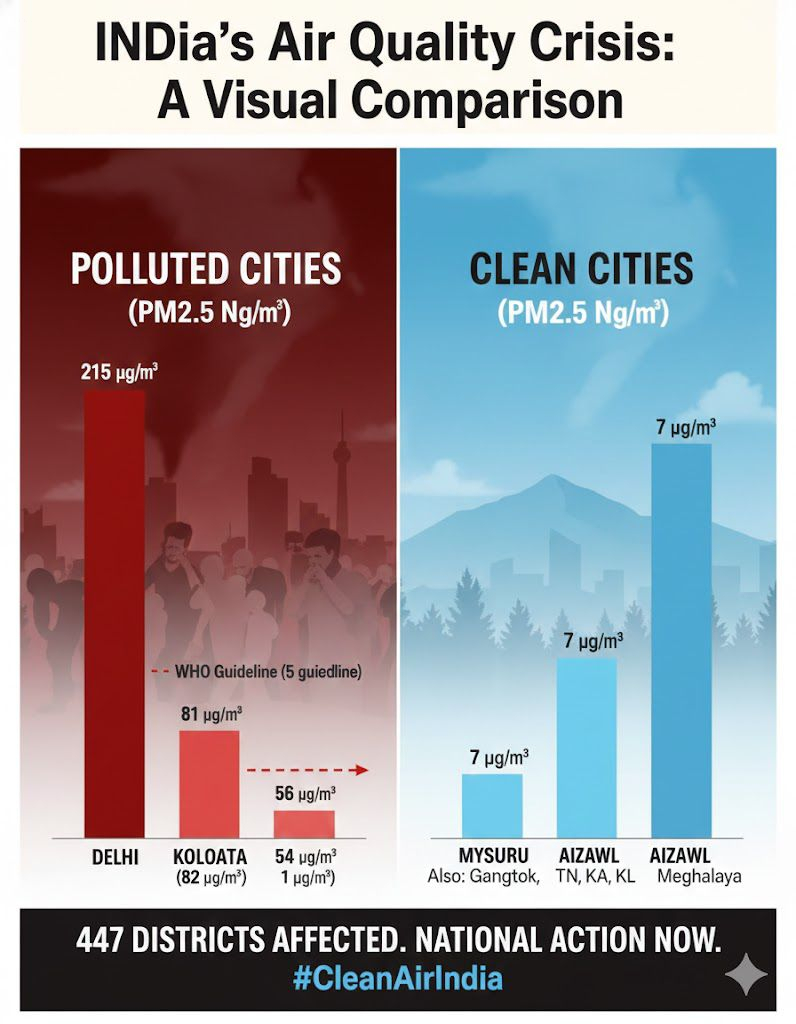
• India’s Air Crisis: 447 Districts Breach Safety LimitsA new 2025 report reveals that 60% of Indian districts (447 out of 749) are recording dangerous Particulate Matter 2.5 levels. While Delhi remains the worst affected—triggering Stage IV GRAP restrictions this week—the crisis has expanded globally.In the South, Bengaluru and Mumbai are seeing uncharacteristic winter spikes due to construction and vehicular density. Despite a ₹2,394 crore allocation under the National Clean Air Programme (NCAP), experts point to "underutilization of funds" in states like Karnataka and Punjab as a major hurdle. The goal: a 40% reduction by 2026. Will India meet the deadline?

    The December 2025 Reality Check: Delhi-NCR: Hazardous (AQI 461+). Schools closed, WFH in effect. Kolkata: Choking under a "diesel legacy" and stagnant winds. Bengaluru: The "Garden City" isn't safe—AQI spiked to 200 last month. The Clean Spots: Mysuru and Shillong are among the few still breathing easy.

    #AirPollution #IndiaAirQuality #CleanAirIndia #PublicHealth #Environment
    India’s Air Crisis: 447 Districts Breach Safety LimitsA new 2025 report reveals that 60% of Indian districts (447 out of 749) are recording dangerous Particulate Matter 2.5 levels. While Delhi remains the worst affected—triggering Stage IV GRAP restrictions this week—the crisis has expanded globally.In the South, Bengaluru and Mumbai are seeing uncharacteristic winter spikes due to construction and vehicular density. Despite a ₹2,394 crore allocation under the National Clean Air Programme (NCAP), experts point to "underutilization of funds" in states like Karnataka and Punjab as a major hurdle. The goal: a 40% reduction by 2026. Will India meet the deadline? The December 2025 Reality Check: 📍 Delhi-NCR: Hazardous (AQI 461+). Schools closed, WFH in effect. 📍 Kolkata: Choking under a "diesel legacy" and stagnant winds. 📍 Bengaluru: The "Garden City" isn't safe—AQI spiked to 200 last month. 📍 The Clean Spots: Mysuru and Shillong are among the few still breathing easy. #AirPollution #IndiaAirQuality #CleanAirIndia #PublicHealth #Environment
    0 Comments 0 Shares 25 Views 0 Reviews
  • In an environment where the lines between patriotism and journalism are constantly tested, and where institutional and commercial pressures are immense, have you ever faced a moment where you had to choose between the truth that India needs to hear and the story that your audience, your management, or the nation wants to hear?

    In that moment of conflict, who—or what—is your ultimate allegiance to?
    In an environment where the lines between patriotism and journalism are constantly tested, and where institutional and commercial pressures are immense, have you ever faced a moment where you had to choose between the truth that India needs to hear and the story that your audience, your management, or the nation wants to hear? In that moment of conflict, who—or what—is your ultimate allegiance to?
    0 Comments 0 Shares 1K Views 0 Reviews
  • Need Urgent Help
    We need your help with a big problem that media people in Andhra Pradesh are facing.

    The media in Andhra Pradesh is active, but it's hard for journalists to do their jobs freely. The biggest problem is getting quick and correct information from the government. This makes it really tough for them to report the news fairly.

    Since you are a strong supporter of media rights, we ask the Bharat Media Association to

    Look into how serious this problem is.

    Talk with government officials and other groups to find solutions.

    Work for rules that protect media people's rights, safety, and respect.

    Believe Our strong voice together can make a real difference, helping to create a better environment for media professionals. We hope you can act quickly on this important matter.
    Need Urgent Help We need your help with a big problem that media people in Andhra Pradesh are facing. The media in Andhra Pradesh is active, but it's hard for journalists to do their jobs freely. The biggest problem is getting quick and correct information from the government. This makes it really tough for them to report the news fairly. Since you are a strong supporter of media rights, we ask the Bharat Media Association to Look into how serious this problem is. Talk with government officials and other groups to find solutions. Work for rules that protect media people's rights, safety, and respect. Believe Our strong voice together can make a real difference, helping to create a better environment for media professionals. We hope you can act quickly on this important matter.
    0 Comments 0 Shares 2K Views 0 Reviews
  • 10000₹ - 15000₹ / Month
    Location
    Madhapur
    Type
    Full Time
    Status
    Open
    Tamada Media is one of South India’s fastest-growing digital media companies. we at Tamada Media, tossed the box out. We believe in boundless innovation and encourage young talent to realize their true potential. We are partnered with some of India’s leading OTT players and satellite television channels to give them digital-first content.

    Job Responsibilities: Use generative AI tools to transform raw ideas into scripts, visuals, videos, and voiceovers. Prompt, tweak, remix, and experiment with tools like ChatGPT, Midjourney, Runway ML, Eleven Labs, Kling AI, and the next big thing. Craft engaging stories, reels, digital campaigns, and creative content using AI, not traditional production. Brainstorm unique ideas and pitch them with confidence to turn them into real, high-impact content. Collaborate in a dynamic, experimental environment where creativity and tech collide every day. Stay ahead of the curve with trends, tools, and storytelling formats that push boundaries.
    Tamada Media is one of South India’s fastest-growing digital media companies. we at Tamada Media, tossed the box out. We believe in boundless innovation and encourage young talent to realize their true potential. We are partnered with some of India’s leading OTT players and satellite television channels to give them digital-first content. Job Responsibilities: Use generative AI tools to transform raw ideas into scripts, visuals, videos, and voiceovers. Prompt, tweak, remix, and experiment with tools like ChatGPT, Midjourney, Runway ML, Eleven Labs, Kling AI, and the next big thing. Craft engaging stories, reels, digital campaigns, and creative content using AI, not traditional production. Brainstorm unique ideas and pitch them with confidence to turn them into real, high-impact content. Collaborate in a dynamic, experimental environment where creativity and tech collide every day. Stay ahead of the curve with trends, tools, and storytelling formats that push boundaries.
    0 Comments 0 Shares 3K Views 0 Reviews

  • Environmental Awareness
    Our planet is not just a place we inhabit; it is our cherished home, and safeguarding it is a responsibility we all share. At Bharat Aawaz, we are deeply committed to fostering awareness about pressing environmental issues and championing the cause of sustainable living.
    We invite you to join us on this crucial journey as we delve into a variety of topics that are vital for the health of our planet. From the alarming impacts of climate change and the urgent need for renewable energy sources to the importance of wildlife conservation and biodiversity, we will explore the intricate connections that bind us to our environment.
    Together, we can cultivate a deeper understanding of these challenges and work collaboratively to implement practical solutions. Our collective actions can lead to a significant positive impact, not just for our generation, but for the many that will follow.
    Let us unite in our efforts to create a sustainable future, where harmony between humanity and nature prevails. By spreading awareness and taking actionable steps, we can ensure that the Earth remains a vibrant and thriving home for all forms of life. Join us in this essential mission!
    #Bharataawaz#EnvironmentalAwareness #Sustainability
    Environmental Awareness Our planet is not just a place we inhabit; it is our cherished home, and safeguarding it is a responsibility we all share. At Bharat Aawaz, we are deeply committed to fostering awareness about pressing environmental issues and championing the cause of sustainable living. We invite you to join us on this crucial journey as we delve into a variety of topics that are vital for the health of our planet. From the alarming impacts of climate change and the urgent need for renewable energy sources to the importance of wildlife conservation and biodiversity, we will explore the intricate connections that bind us to our environment. Together, we can cultivate a deeper understanding of these challenges and work collaboratively to implement practical solutions. Our collective actions can lead to a significant positive impact, not just for our generation, but for the many that will follow. Let us unite in our efforts to create a sustainable future, where harmony between humanity and nature prevails. By spreading awareness and taking actionable steps, we can ensure that the Earth remains a vibrant and thriving home for all forms of life. Join us in this essential mission! #Bharataawaz#EnvironmentalAwareness #Sustainability
    0 Comments 0 Shares 2K Views 0 Reviews

  • Behind Every Picture, A Thousand Risks!

    "Behind Every Picture, A Thousand Risks" speaks to the incredible dangers and challenges journalists often face to capture moments that define history. Unlike staged photos or safer settings, many of these images are taken in high-stakes environments where reporters confront immense risks to document reality. Each shot could mean stepping into conflict zones, navigating through protests, or covering natural disasters where their own lives are in jeopardy. These reporters often work under intense pressure, aware that a single image can reveal truths that words may struggle to convey.

    Such iconic images not only shape public opinion but also spark change, evoking empathy, outrage, or a call for justice. Take, for example, images from the Vietnam War or the Civil Rights Movement—photos that exposed harsh truths and impacted public consciousness, ultimately shifting the course of events. Many journalists have gone to great lengths to immortalize these moments, sometimes sacrificing their health or safety. Their work serves as a testament to their dedication to truth, showing the lengths they go to so the world can witness and understand powerful events unfolding around us. These images underscore the resilience and courage within the field of journalism, showcasing how capturing a single moment can carry profound significance.
    #Bharat Aawaz
    Behind Every Picture, A Thousand Risks! "Behind Every Picture, A Thousand Risks" speaks to the incredible dangers and challenges journalists often face to capture moments that define history. Unlike staged photos or safer settings, many of these images are taken in high-stakes environments where reporters confront immense risks to document reality. Each shot could mean stepping into conflict zones, navigating through protests, or covering natural disasters where their own lives are in jeopardy. These reporters often work under intense pressure, aware that a single image can reveal truths that words may struggle to convey. Such iconic images not only shape public opinion but also spark change, evoking empathy, outrage, or a call for justice. Take, for example, images from the Vietnam War or the Civil Rights Movement—photos that exposed harsh truths and impacted public consciousness, ultimately shifting the course of events. Many journalists have gone to great lengths to immortalize these moments, sometimes sacrificing their health or safety. Their work serves as a testament to their dedication to truth, showing the lengths they go to so the world can witness and understand powerful events unfolding around us. These images underscore the resilience and courage within the field of journalism, showcasing how capturing a single moment can carry profound significance. #Bharat Aawaz
    0 Comments 0 Shares 1K Views 0 Reviews

  • Investigative Journalism’s Long Game

    Investigative journalism stands apart from day-to-day news reporting by delving deep into issues that demand rigorous research, time, and dedication. Unlike "fast news," which focuses on immediate events and real-time updates, investigative journalism involves a process of uncovering hidden truths, often buried beneath layers of secrecy, corruption, or neglect. Reporters involved in these efforts dedicate months or even years to gathering evidence, verifying facts, and sometimes collaborating with various sources, including whistleblowers, to shed light on stories that powerful entities might prefer remain hidden.

    This dedication to unveiling the truth can have a lasting impact. Through their persistent efforts, investigative reporters can reveal information that sparks public outrage, leads to legislative changes, or shifts societal attitudes. For example, stories about government corruption, environmental abuses, human rights violations, or corporate fraud have, in many instances, led to the resignation of officials, policy reforms, or strengthened legal protections for vulnerable communities.

    Such journalism not only requires resilience but also a willingness to endure the challenges and risks that come with exposing uncomfortable truths. Investigative reporters often operate with minimal recognition for their work, yet their discoveries can shape history, redefine justice, and drive social change—showcasing the enduring influence of the written word when backed by courage and commitment.
    #BharatAawaz
    Investigative Journalism’s Long Game Investigative journalism stands apart from day-to-day news reporting by delving deep into issues that demand rigorous research, time, and dedication. Unlike "fast news," which focuses on immediate events and real-time updates, investigative journalism involves a process of uncovering hidden truths, often buried beneath layers of secrecy, corruption, or neglect. Reporters involved in these efforts dedicate months or even years to gathering evidence, verifying facts, and sometimes collaborating with various sources, including whistleblowers, to shed light on stories that powerful entities might prefer remain hidden. This dedication to unveiling the truth can have a lasting impact. Through their persistent efforts, investigative reporters can reveal information that sparks public outrage, leads to legislative changes, or shifts societal attitudes. For example, stories about government corruption, environmental abuses, human rights violations, or corporate fraud have, in many instances, led to the resignation of officials, policy reforms, or strengthened legal protections for vulnerable communities. Such journalism not only requires resilience but also a willingness to endure the challenges and risks that come with exposing uncomfortable truths. Investigative reporters often operate with minimal recognition for their work, yet their discoveries can shape history, redefine justice, and drive social change—showcasing the enduring influence of the written word when backed by courage and commitment. #BharatAawaz
    0 Comments 0 Shares 2K Views 0 Reviews
  • The Art of Editorial Writing!

    Crafting Compelling and Influential Pieces Editorial writing is a unique form of journalism that allows writers to express their opinions, advocate for change, and reflect the sentiments of the community. Well-written editorials do more than just present an argument; they inspire action, influence public opinion, and contribute to important discussions in society. Here’s how to create impactful editorials and analyze examples of those that have shaped public discourse. Tips for Crafting Compelling Editorials Choose a Strong, Clear Position: The first step to writing an effective editorial is selecting a topic that matters and taking a clear, strong position on it. The writer must be decisive and articulate why their perspective on the issue is important. Readers should not be left wondering where the writer stands. Understand Your Audience: Knowing the audience is crucial when writing an editorial. Understanding the readers' concerns, values, and knowledge level helps tailor the message in a way that resonates. For example, a local newspaper’s editorial on city zoning laws would address issues relevant to the community, whereas a national publication might tackle broader topics like climate policy. Research and Gather Facts: A compelling editorial isn’t just about opinions; it’s about well-researched, evidence-backed arguments. Including statistics, quotes from experts, and real-life examples strengthens the writer’s position and adds credibility. Readers are more likely to be persuaded if the writer uses solid evidence. Offer Solutions, Not Just Criticism: An editorial that only criticizes without offering solutions may feel one-sided. Instead, effective editorials provide constructive suggestions or pathways to improvement. This could involve recommending policy changes, supporting specific actions, or proposing new ideas for consideration. Maintain a Balanced Tone: While passion and emotion are important, balance is key. Editorials should avoid overly aggressive or confrontational language that could alienate readers. Instead, focus on making the case calmly and persuasively, allowing the facts and logic to lead the argument. Appeal to Emotion: Editorials should connect with readers on a personal level. Whether it’s through storytelling, invoking shared values, or addressing urgent community issues, appealing to readers' emotions helps make the message more impactful and memorable. Conclude with a Call to Action: Every editorial should end with a clear call to action, urging readers or authorities to take specific steps. Whether it’s signing a petition, voting in an election, or simply reflecting on the issue, the conclusion should inspire action or further thought. Shaping Public Opinion: Well-crafted editorials can shift public opinion by presenting clear, persuasive arguments on critical issues. They create a space for dialogue, encouraging readers to think about the issue from a new perspective. Holding Power Accountable: Editorials often take on a watchdog role, challenging those in power to act responsibly. By calling out corruption, injustice, or neglect, editorials push for greater transparency and accountability in government, business, and other sectors. Advocating for Social Change: Many editorials have sparked social movements by raising awareness about critical issues like civil rights, gender equality, and environmental protection. These editorials often become a rallying point for communities and activists, amplifying voices that demand change.
    #Bharat Aawaz
    The Art of Editorial Writing! Crafting Compelling and Influential Pieces Editorial writing is a unique form of journalism that allows writers to express their opinions, advocate for change, and reflect the sentiments of the community. Well-written editorials do more than just present an argument; they inspire action, influence public opinion, and contribute to important discussions in society. Here’s how to create impactful editorials and analyze examples of those that have shaped public discourse. Tips for Crafting Compelling Editorials Choose a Strong, Clear Position: The first step to writing an effective editorial is selecting a topic that matters and taking a clear, strong position on it. The writer must be decisive and articulate why their perspective on the issue is important. Readers should not be left wondering where the writer stands. Understand Your Audience: Knowing the audience is crucial when writing an editorial. Understanding the readers' concerns, values, and knowledge level helps tailor the message in a way that resonates. For example, a local newspaper’s editorial on city zoning laws would address issues relevant to the community, whereas a national publication might tackle broader topics like climate policy. Research and Gather Facts: A compelling editorial isn’t just about opinions; it’s about well-researched, evidence-backed arguments. Including statistics, quotes from experts, and real-life examples strengthens the writer’s position and adds credibility. Readers are more likely to be persuaded if the writer uses solid evidence. Offer Solutions, Not Just Criticism: An editorial that only criticizes without offering solutions may feel one-sided. Instead, effective editorials provide constructive suggestions or pathways to improvement. This could involve recommending policy changes, supporting specific actions, or proposing new ideas for consideration. Maintain a Balanced Tone: While passion and emotion are important, balance is key. Editorials should avoid overly aggressive or confrontational language that could alienate readers. Instead, focus on making the case calmly and persuasively, allowing the facts and logic to lead the argument. Appeal to Emotion: Editorials should connect with readers on a personal level. Whether it’s through storytelling, invoking shared values, or addressing urgent community issues, appealing to readers' emotions helps make the message more impactful and memorable. Conclude with a Call to Action: Every editorial should end with a clear call to action, urging readers or authorities to take specific steps. Whether it’s signing a petition, voting in an election, or simply reflecting on the issue, the conclusion should inspire action or further thought. Shaping Public Opinion: Well-crafted editorials can shift public opinion by presenting clear, persuasive arguments on critical issues. They create a space for dialogue, encouraging readers to think about the issue from a new perspective. Holding Power Accountable: Editorials often take on a watchdog role, challenging those in power to act responsibly. By calling out corruption, injustice, or neglect, editorials push for greater transparency and accountability in government, business, and other sectors. Advocating for Social Change: Many editorials have sparked social movements by raising awareness about critical issues like civil rights, gender equality, and environmental protection. These editorials often become a rallying point for communities and activists, amplifying voices that demand change. #Bharat Aawaz
    0 Comments 0 Shares 1K Views 0 Reviews
  • Importance of Fostering New Voices in Journalism !

    Diversity of Perspectives: Young people often see the world through a unique lens, shaped by their experiences in a rapidly changing global environment. Fostering these voices helps diversify the narratives in media and ensures that stories relevant to younger demographics, such as climate change, social justice, mental health, and technology, are more prominently covered. Innovation in Storytelling: The younger generation tends to be more tech-savvy and creative in using new tools for storytelling. They are more likely to experiment with social media, podcasts, video content, and interactive journalism. By engaging youth, journalism evolves to meet modern expectations and uses emerging platforms to reach wider audiences. Maintaining Democratic Ideals: Journalism is often described as a cornerstone of democracy, providing the public with information to make informed decisions. Involving youth in journalism means equipping the next generation with the skills and ethics necessary to hold power accountable and give voice to the underrepresented. Initiatives to Encourage Youth in Journalism Various programs and initiatives have been launched to engage youth in journalism, aiming to provide them with the skills, opportunities, and platforms to succeed. Journalism Workshops and Training Programs: Schools, colleges, and non-profit organizations offer workshops that teach the basics of journalism—reporting, writing, fact-checking, and digital content creation. These programs often focus on hands-on experiences, encouraging students to create their own stories, conduct interviews, and learn about the ethics of journalism. Youth Journalism Competitions: Many competitions are held globally and locally to inspire young journalists. These competitions often encourage youth to report on issues that matter to them, giving them a platform to have their voices heard. Winning entries are sometimes published in prominent outlets, helping young reporters build their portfolios. Mentorship Programs: Some initiatives pair young aspiring journalists with experienced reporters to guide them through the complexities of the profession. Mentorship helps young people navigate challenges, build connections in the industry, and receive constructive feedback on their work. Youth-Led Media Platforms: There are several platforms dedicated solely to youth journalism. These outlets allow young reporters to publish their work, covering issues that resonate with their peers. Such platforms foster a sense of ownership and leadership in journalism, enabling young people to take the lead on storytelling.
    #Bharat Aawaz
    Importance of Fostering New Voices in Journalism ! Diversity of Perspectives: Young people often see the world through a unique lens, shaped by their experiences in a rapidly changing global environment. Fostering these voices helps diversify the narratives in media and ensures that stories relevant to younger demographics, such as climate change, social justice, mental health, and technology, are more prominently covered. Innovation in Storytelling: The younger generation tends to be more tech-savvy and creative in using new tools for storytelling. They are more likely to experiment with social media, podcasts, video content, and interactive journalism. By engaging youth, journalism evolves to meet modern expectations and uses emerging platforms to reach wider audiences. Maintaining Democratic Ideals: Journalism is often described as a cornerstone of democracy, providing the public with information to make informed decisions. Involving youth in journalism means equipping the next generation with the skills and ethics necessary to hold power accountable and give voice to the underrepresented. Initiatives to Encourage Youth in Journalism Various programs and initiatives have been launched to engage youth in journalism, aiming to provide them with the skills, opportunities, and platforms to succeed. Journalism Workshops and Training Programs: Schools, colleges, and non-profit organizations offer workshops that teach the basics of journalism—reporting, writing, fact-checking, and digital content creation. These programs often focus on hands-on experiences, encouraging students to create their own stories, conduct interviews, and learn about the ethics of journalism. Youth Journalism Competitions: Many competitions are held globally and locally to inspire young journalists. These competitions often encourage youth to report on issues that matter to them, giving them a platform to have their voices heard. Winning entries are sometimes published in prominent outlets, helping young reporters build their portfolios. Mentorship Programs: Some initiatives pair young aspiring journalists with experienced reporters to guide them through the complexities of the profession. Mentorship helps young people navigate challenges, build connections in the industry, and receive constructive feedback on their work. Youth-Led Media Platforms: There are several platforms dedicated solely to youth journalism. These outlets allow young reporters to publish their work, covering issues that resonate with their peers. Such platforms foster a sense of ownership and leadership in journalism, enabling young people to take the lead on storytelling. #Bharat Aawaz
    0 Comments 0 Shares 64 Views 0 Reviews
Bharat Aawaz | BMA | IINNSIDE https://ba.bharataawaz.com