CONNECT - Neti Balale Repati Pourulu (TODAY'S CHILDREN ARE TOMORROW'S CITIZENS)
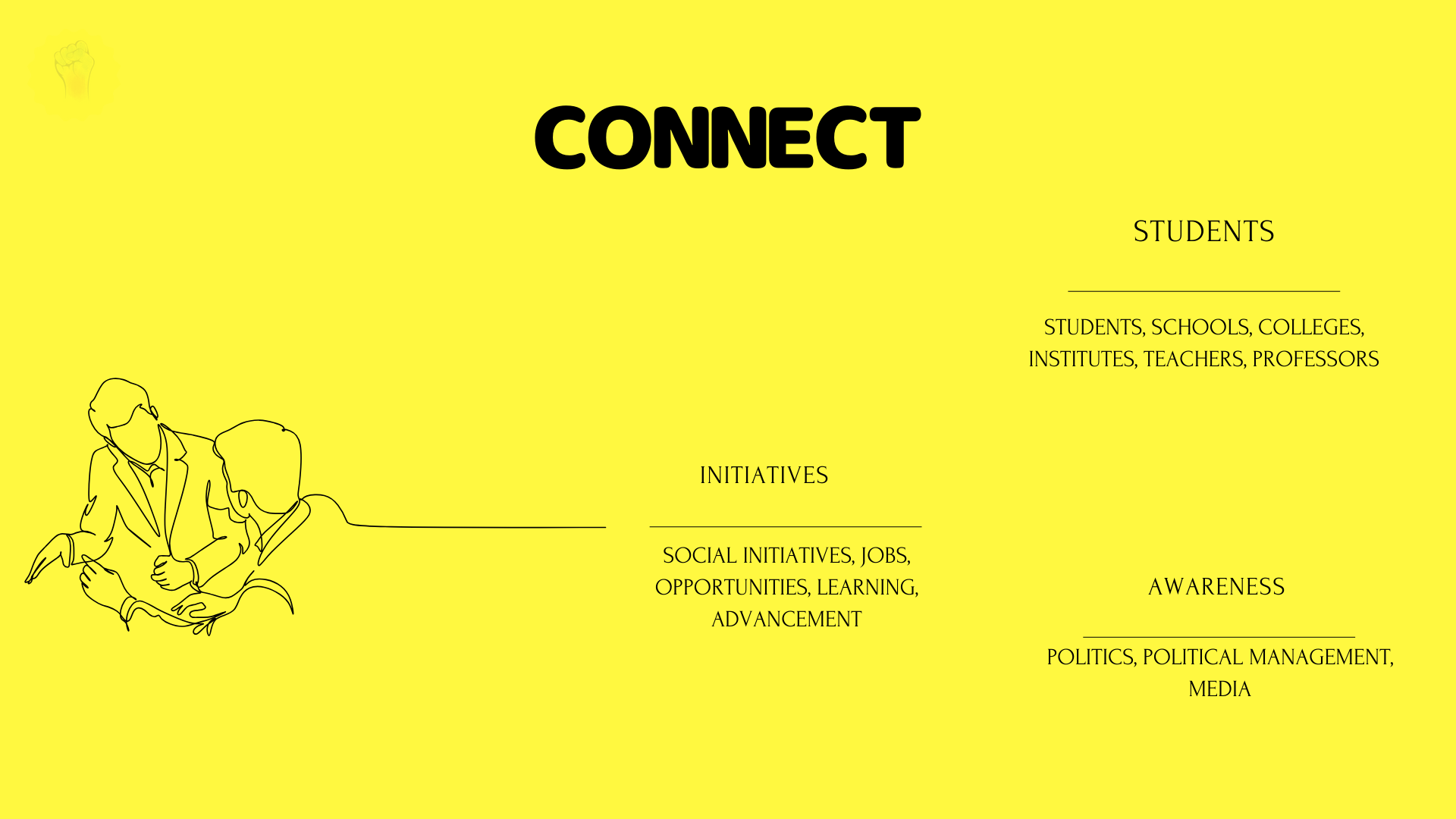
Social Initiatives, Learning Opportunities, Political Management, and Awareness Related to Students, Education, Political and Media Involvement.
Students, Schools, Colleges, Institutes, Teachers, Professors
Educational Access Programs: Ensuring students have access to quality education through scholarships, online learning resources, and infrastructure development.
Teacher Training Initiatives: Professional development programs for teachers and professors to enhance teaching methods and adapt to new technologies.
Student Exchange Programs: Opportunities for students to experience international education and cultural exchange.
Research Funding and Support: Grants and support for students and educators working on academic research, innovation, and scientific discovery.
Inclusive Education: Initiatives aimed at integrating students with disabilities and ensuring schools are inclusive and accessible for all.
Jobs, Opportunities, Learning, Advancement
Employment Opportunities: Connecting people with job listings, internships, and career fairs to help them find suitable work.
Skill Development Programs: Offering courses or workshops for technical skills (coding, data science) and soft skills (communication, leadership).
Educational Advancement: Scholarships, grants, and support systems to help individuals pursue higher education.
Vocational Training: Programs focused on practical skills like carpentry, plumbing, or automotive repair for those seeking alternatives to traditional education.
Entrepreneurship Support: Resources for starting businesses, including funding, mentorship, and networking opportunities.
Initiatives in Politics, Political Management, Media
Civic Engagement Programs: Initiatives encouraging people, especially youth, to participate in political processes like voting, public speaking, or community organizing.
Political Training: Courses or workshops that teach about political management, public policy analysis, and campaign strategy.
Media Literacy Campaigns: Programs aimed at helping individuals critically analyze news sources, understand media bias, and navigate misinformation.
Policy Advocacy: Initiatives advocating for legislative changes on key issues such as education reform, climate action, and social justice.
Transparency and Accountability: Campaigns promoting good governance, anti-corruption measures, and responsible leadership.
Encouraging students to engage in politics and media is important for the future of India because they are the country’s largest and most energetic group. By involving them in these fields, they learn about how the country is governed and gain skills like leadership, public speaking, and critical thinking. This makes them informed and active citizens who can bring fresh ideas and drive positive change. When students participate in politics, they can address issues that directly affect them, like education and employment, and work to improve society.
Involvement in media also helps them understand and report on important topics, promoting transparency and accountability. Schools and colleges can support this by offering courses on politics and journalism, organizing debates and youth parliaments, and providing internships with local governments and media organizations. By doing so, students are empowered to become the next generation of leaders who will shape India’s future.
#Bharataawaz#Students#Teachers#Media#Politics
65 Views