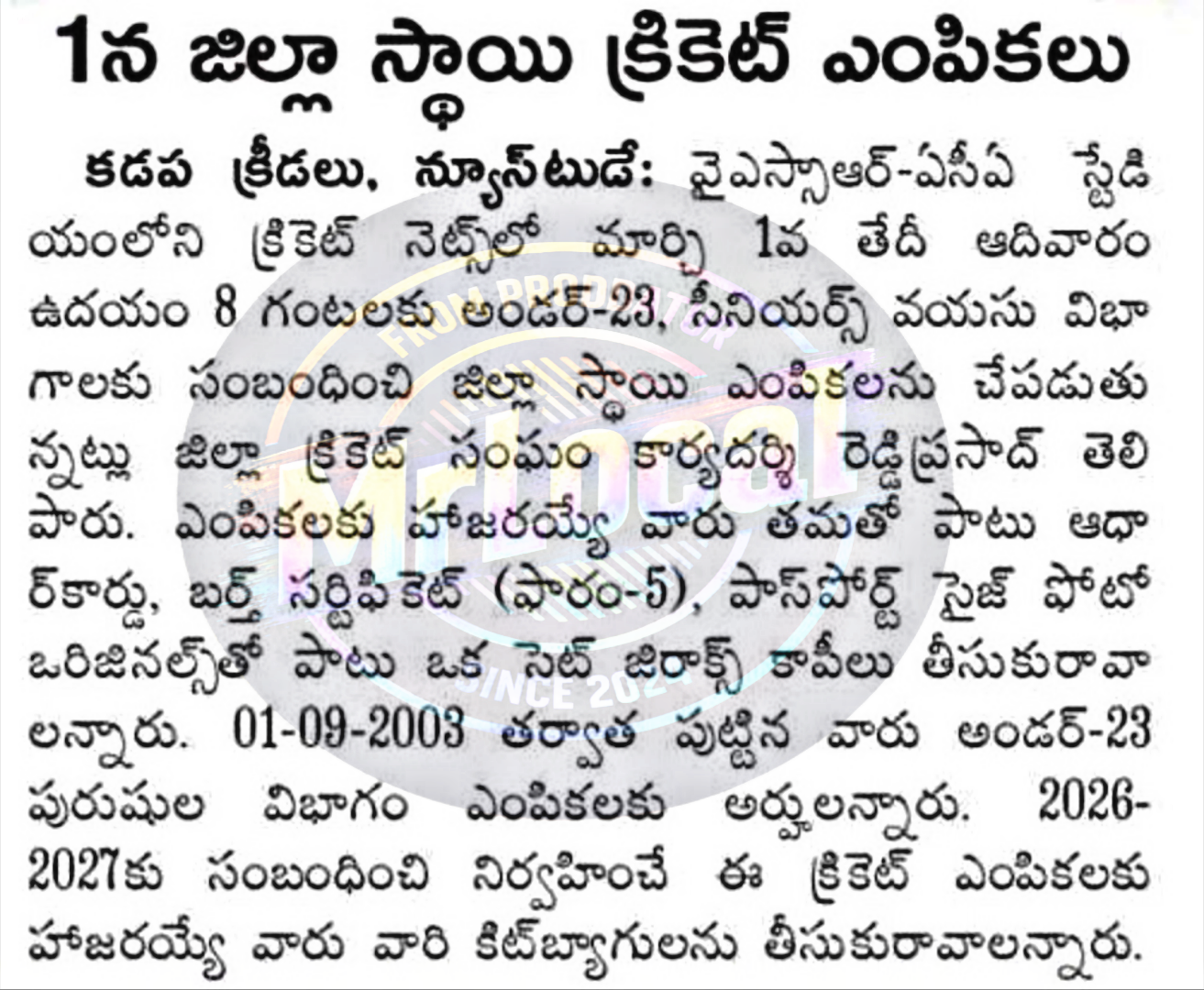
• Big Opportunity for Kadapa Cricketers!
    Your dream to represent the district starts here. Utilize this chance to showcase your talent at the District Level Cricket Selections for the 2026-27 season!
    🏏 Big Opportunity for Kadapa Cricketers! 🌟 Your dream to represent the district starts here. Utilize this chance to showcase your talent at the District Level Cricket Selections for the 2026-27 season!
    0 Comments 0 Shares 303 Views 0 Reviews
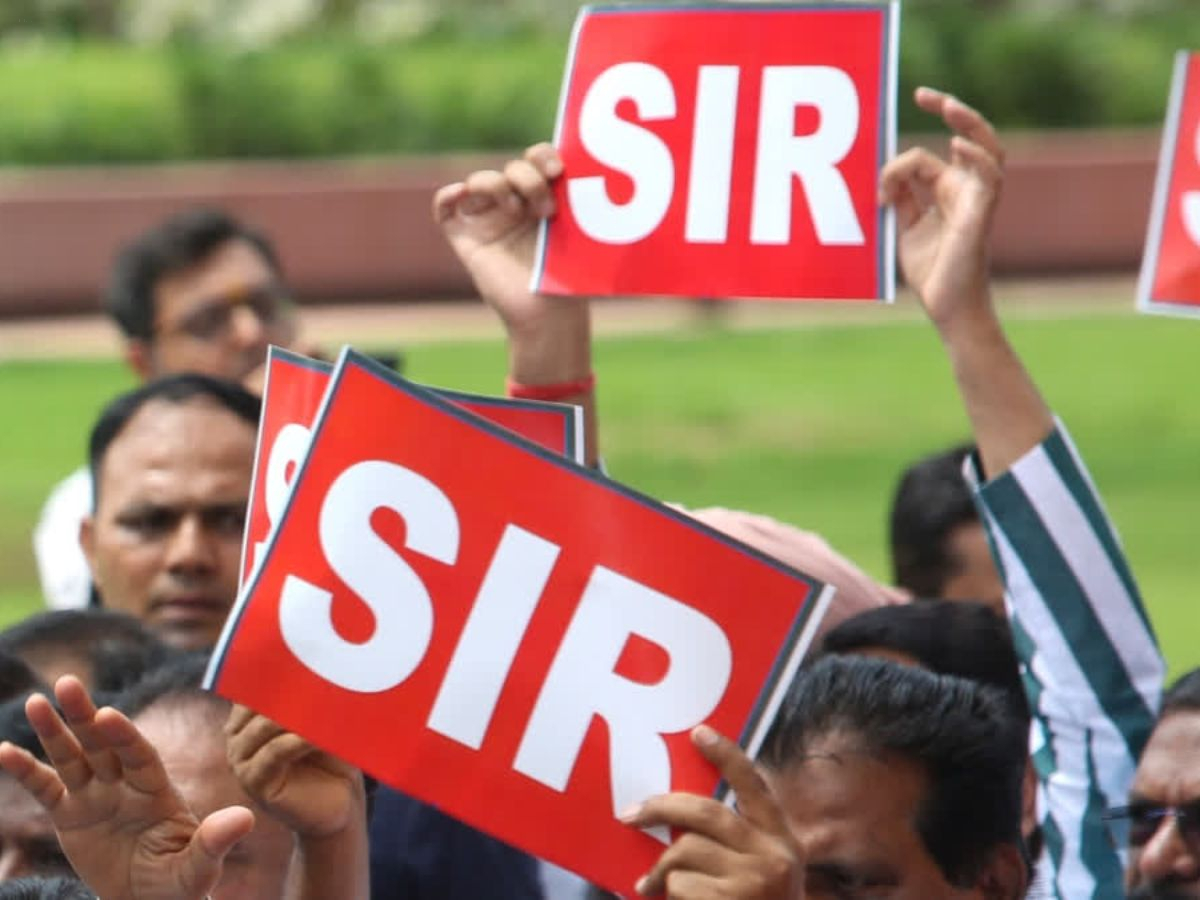
  • Special Intensive Revision (SIR) to Begin in Telangana in April
    The Election Commission is set to begin the Special Intensive Revision (SIR) of the voters’ list in Telangana districts, including Hyderabad, from April. Ahead of this, Booth Level Officers (BLOs) have started linking voters’ names with the 2002 electoral roll — a process known as progeny mapping.
    What is Progeny Mapping?
    During the pre-SIR exercise:
    Linking is done if a voter’s name appears directly in the 2002 electoral roll.
    Mapping is done if a relative’s name appears in the 2002 list.
    As per Election Commission guidelines, the following relatives are valid for mapping:
    Father
    Mother
    Maternal grandfather
    Maternal grandmother
    Paternal grandfather
    Paternal grandmother
    However, simply mentioning a relative’s name is not enough. In certain cases, voters may receive notices asking them to submit documents to prove the relationship.
    What Are ‘Logical Discrepancies’?
    Authorities may flag and issue notices if there are:
    Name mismatch between records
    Age gap with parents less than 15 years or more than 50 years
    Age gap with grandparents less than 40 years
    Six or more voters mapped to one person in the last SIR list
    If such discrepancies arise, citizens may need to provide documentary proof to validate their details.
    Important for Citizens
    Residents are advised to:
    Verify their voter details
    Keep identity and relationship documents ready
    Cooperate with BLOs during verification
    The SIR aims to clean up and update electoral rolls, ensuring accuracy ahead of future elections.
    # telangana #sir #electioncommission
    @s.azharalam
    Special Intensive Revision (SIR) to Begin in Telangana in April The Election Commission is set to begin the Special Intensive Revision (SIR) of the voters’ list in Telangana districts, including Hyderabad, from April. Ahead of this, Booth Level Officers (BLOs) have started linking voters’ names with the 2002 electoral roll — a process known as progeny mapping. 🔎 What is Progeny Mapping? During the pre-SIR exercise: Linking is done if a voter’s name appears directly in the 2002 electoral roll. Mapping is done if a relative’s name appears in the 2002 list. As per Election Commission guidelines, the following relatives are valid for mapping: Father Mother Maternal grandfather Maternal grandmother Paternal grandfather Paternal grandmother However, simply mentioning a relative’s name is not enough. In certain cases, voters may receive notices asking them to submit documents to prove the relationship. ⚠️ What Are ‘Logical Discrepancies’? Authorities may flag and issue notices if there are: ❌ Name mismatch between records ❌ Age gap with parents less than 15 years or more than 50 years ❌ Age gap with grandparents less than 40 years ❌ Six or more voters mapped to one person in the last SIR list If such discrepancies arise, citizens may need to provide documentary proof to validate their details. 📌 Important for Citizens Residents are advised to: Verify their voter details Keep identity and relationship documents ready Cooperate with BLOs during verification The SIR aims to clean up and update electoral rolls, ensuring accuracy ahead of future elections. # telangana #sir #electioncommission @s.azharalam
    0 Comments 0 Shares 486 Views 0 Reviews
  • సిరిసిల్ల మున్సిపల్ కౌన్సిలర్ ల ప్రమాణ స్వీకారం, చైర్ పర్సన్ గా జిందం కళా చక్రపాణి, వైస్ చైర్మన్ గా దార్ల సందీప్ #muncipalelectionsircilla
    సిరిసిల్ల మున్సిపల్ కౌన్సిలర్ ల ప్రమాణ స్వీకారం, చైర్ పర్సన్ గా జిందం కళా చక్రపాణి, వైస్ చైర్మన్ గా దార్ల సందీప్ #muncipalelectionsircilla
    0 Comments 0 Shares 302 Views 0 Reviews
  • Do you believe your local MLA has fulfilled their election promises?
    Do you believe your local MLA has fulfilled their election promises?
    0
    2
    0
    0
    0 Comments 0 Shares 927 Views 0 Reviews
  • “Do you support the idea of ‘One Nation, One Election’ in India, aligning general and state elections together?”
    “Do you support the idea of ‘One Nation, One Election’ in India, aligning general and state elections together?”
    2
    0
    0
    0
    0 Comments 0 Shares 1K Views 0 Reviews
  • Have You Ever Asked Your MLA/MP About the Promises they Made During Elections?

    Your Action Matters Alot!
    Your Questioning May Change!
    Your Resposibilty to ask on Behalf of PUBLIC!
    Have You Ever Asked Your MLA/MP About the Promises they Made During Elections? Your Action Matters Alot! Your Questioning May Change! Your Resposibilty to ask on Behalf of PUBLIC!
    0
    0
    1
    0
    0
    0 Comments 0 Shares 702 Views 0 Reviews
  • Covering Local Elections: A Reporter's Journey!

    Covering local elections is a pivotal responsibility for reporters, as these events shape the governance of communities and have a direct impact on the lives of residents. This journey involves navigating various challenges while striving for fairness and accuracy in reporting. Here’s an in-depth look at the experience of a reporter covering local elections:

    1. Preparing for the Assignment:
    Before the election season begins, a reporter immerses themselves in the local political landscape. This involves researching candidates, understanding key issues, and identifying the electorate's concerns.
    2. Building Relationships:
    Establishing connections with candidates, political parties, and community leaders is crucial. This allows the reporter to gain insights and facilitate access to interviews and events.
    3. Covering Campaign Events:
    During the campaign, reporters attend rallies, debates, and community forums, capturing the atmosphere and key moments. They interview candidates, supporters, and voters to gather diverse perspectives.
    4. Fact-Checking and Verification:
    Accurate reporting is essential, especially when candidates make claims about policies or opponents. The reporter dedicates time to fact-checking statements and ensuring that all information presented is accurate.
    5. Engaging the Community:
    A reporter also plays a role in engaging the community by covering voter registration drives, town hall meetings, and local issues that matter to residents. This helps to inform the electorate about the significance of their votes.
    6. Election Day Coverage:
    On election day, reporters are on the ground, reporting on voter turnout, long lines, and any irregularities at polling stations. They capture the energy and emotions of voters as they participate in the democratic process.
    7. Analyzing Results:
    After the polls close, reporters analyze the election results, providing insights into what the outcomes mean for the community. This involves interpreting data, understanding voting trends, and interviewing newly elected officials.
    8. Reflecting on the Experience:
    After the election, the reporter reflects on their experiences and the lessons learned throughout the process. They consider the importance of their role in informing the public and contributing to democracy.
    #BharatAawaz

    Covering Local Elections: A Reporter's Journey! Covering local elections is a pivotal responsibility for reporters, as these events shape the governance of communities and have a direct impact on the lives of residents. This journey involves navigating various challenges while striving for fairness and accuracy in reporting. Here’s an in-depth look at the experience of a reporter covering local elections: 1. Preparing for the Assignment: Before the election season begins, a reporter immerses themselves in the local political landscape. This involves researching candidates, understanding key issues, and identifying the electorate's concerns. 2. Building Relationships: Establishing connections with candidates, political parties, and community leaders is crucial. This allows the reporter to gain insights and facilitate access to interviews and events. 3. Covering Campaign Events: During the campaign, reporters attend rallies, debates, and community forums, capturing the atmosphere and key moments. They interview candidates, supporters, and voters to gather diverse perspectives. 4. Fact-Checking and Verification: Accurate reporting is essential, especially when candidates make claims about policies or opponents. The reporter dedicates time to fact-checking statements and ensuring that all information presented is accurate. 5. Engaging the Community: A reporter also plays a role in engaging the community by covering voter registration drives, town hall meetings, and local issues that matter to residents. This helps to inform the electorate about the significance of their votes. 6. Election Day Coverage: On election day, reporters are on the ground, reporting on voter turnout, long lines, and any irregularities at polling stations. They capture the energy and emotions of voters as they participate in the democratic process. 7. Analyzing Results: After the polls close, reporters analyze the election results, providing insights into what the outcomes mean for the community. This involves interpreting data, understanding voting trends, and interviewing newly elected officials. 8. Reflecting on the Experience: After the election, the reporter reflects on their experiences and the lessons learned throughout the process. They consider the importance of their role in informing the public and contributing to democracy. #BharatAawaz

    Like
    1
    0 Comments 0 Shares 2K Views 0 Reviews
  • The Art of Editorial Writing!

    Crafting Compelling and Influential Pieces Editorial writing is a unique form of journalism that allows writers to express their opinions, advocate for change, and reflect the sentiments of the community. Well-written editorials do more than just present an argument; they inspire action, influence public opinion, and contribute to important discussions in society. Here’s how to create impactful editorials and analyze examples of those that have shaped public discourse. Tips for Crafting Compelling Editorials Choose a Strong, Clear Position: The first step to writing an effective editorial is selecting a topic that matters and taking a clear, strong position on it. The writer must be decisive and articulate why their perspective on the issue is important. Readers should not be left wondering where the writer stands. Understand Your Audience: Knowing the audience is crucial when writing an editorial. Understanding the readers' concerns, values, and knowledge level helps tailor the message in a way that resonates. For example, a local newspaper’s editorial on city zoning laws would address issues relevant to the community, whereas a national publication might tackle broader topics like climate policy. Research and Gather Facts: A compelling editorial isn’t just about opinions; it’s about well-researched, evidence-backed arguments. Including statistics, quotes from experts, and real-life examples strengthens the writer’s position and adds credibility. Readers are more likely to be persuaded if the writer uses solid evidence. Offer Solutions, Not Just Criticism: An editorial that only criticizes without offering solutions may feel one-sided. Instead, effective editorials provide constructive suggestions or pathways to improvement. This could involve recommending policy changes, supporting specific actions, or proposing new ideas for consideration. Maintain a Balanced Tone: While passion and emotion are important, balance is key. Editorials should avoid overly aggressive or confrontational language that could alienate readers. Instead, focus on making the case calmly and persuasively, allowing the facts and logic to lead the argument. Appeal to Emotion: Editorials should connect with readers on a personal level. Whether it’s through storytelling, invoking shared values, or addressing urgent community issues, appealing to readers' emotions helps make the message more impactful and memorable. Conclude with a Call to Action: Every editorial should end with a clear call to action, urging readers or authorities to take specific steps. Whether it’s signing a petition, voting in an election, or simply reflecting on the issue, the conclusion should inspire action or further thought. Shaping Public Opinion: Well-crafted editorials can shift public opinion by presenting clear, persuasive arguments on critical issues. They create a space for dialogue, encouraging readers to think about the issue from a new perspective. Holding Power Accountable: Editorials often take on a watchdog role, challenging those in power to act responsibly. By calling out corruption, injustice, or neglect, editorials push for greater transparency and accountability in government, business, and other sectors. Advocating for Social Change: Many editorials have sparked social movements by raising awareness about critical issues like civil rights, gender equality, and environmental protection. These editorials often become a rallying point for communities and activists, amplifying voices that demand change.
    #Bharat Aawaz
    The Art of Editorial Writing! Crafting Compelling and Influential Pieces Editorial writing is a unique form of journalism that allows writers to express their opinions, advocate for change, and reflect the sentiments of the community. Well-written editorials do more than just present an argument; they inspire action, influence public opinion, and contribute to important discussions in society. Here’s how to create impactful editorials and analyze examples of those that have shaped public discourse. Tips for Crafting Compelling Editorials Choose a Strong, Clear Position: The first step to writing an effective editorial is selecting a topic that matters and taking a clear, strong position on it. The writer must be decisive and articulate why their perspective on the issue is important. Readers should not be left wondering where the writer stands. Understand Your Audience: Knowing the audience is crucial when writing an editorial. Understanding the readers' concerns, values, and knowledge level helps tailor the message in a way that resonates. For example, a local newspaper’s editorial on city zoning laws would address issues relevant to the community, whereas a national publication might tackle broader topics like climate policy. Research and Gather Facts: A compelling editorial isn’t just about opinions; it’s about well-researched, evidence-backed arguments. Including statistics, quotes from experts, and real-life examples strengthens the writer’s position and adds credibility. Readers are more likely to be persuaded if the writer uses solid evidence. Offer Solutions, Not Just Criticism: An editorial that only criticizes without offering solutions may feel one-sided. Instead, effective editorials provide constructive suggestions or pathways to improvement. This could involve recommending policy changes, supporting specific actions, or proposing new ideas for consideration. Maintain a Balanced Tone: While passion and emotion are important, balance is key. Editorials should avoid overly aggressive or confrontational language that could alienate readers. Instead, focus on making the case calmly and persuasively, allowing the facts and logic to lead the argument. Appeal to Emotion: Editorials should connect with readers on a personal level. Whether it’s through storytelling, invoking shared values, or addressing urgent community issues, appealing to readers' emotions helps make the message more impactful and memorable. Conclude with a Call to Action: Every editorial should end with a clear call to action, urging readers or authorities to take specific steps. Whether it’s signing a petition, voting in an election, or simply reflecting on the issue, the conclusion should inspire action or further thought. Shaping Public Opinion: Well-crafted editorials can shift public opinion by presenting clear, persuasive arguments on critical issues. They create a space for dialogue, encouraging readers to think about the issue from a new perspective. Holding Power Accountable: Editorials often take on a watchdog role, challenging those in power to act responsibly. By calling out corruption, injustice, or neglect, editorials push for greater transparency and accountability in government, business, and other sectors. Advocating for Social Change: Many editorials have sparked social movements by raising awareness about critical issues like civil rights, gender equality, and environmental protection. These editorials often become a rallying point for communities and activists, amplifying voices that demand change. #Bharat Aawaz
    0 Comments 0 Shares 2K Views 0 Reviews
Bharat Aawaz | BMA | IINNSIDE https://ba.bharataawaz.com