

Ah, Sikkim! A truly enchanting corner of India nestled in the Himalayas. Let me share some fascinating tidbits about this mystical state:
1. **Geography and Borders**:
- Sikkim is a small state in northeastern India, bordered by some remarkable neighbors: China (specifically the Tibet Autonomous Region) to the north and northeast, Bhutan to the east, Nepal's Koshi Province to the west, and West Bengal to the south. It's like a meeting point for cultures and landscapes!
- Fun fact: Sikkim is also close to the Siliguri Corridor, which is the narrow strip of land connecting mainland India to its northeastern states.
2. **Natural Beauty and Biodiversity**:
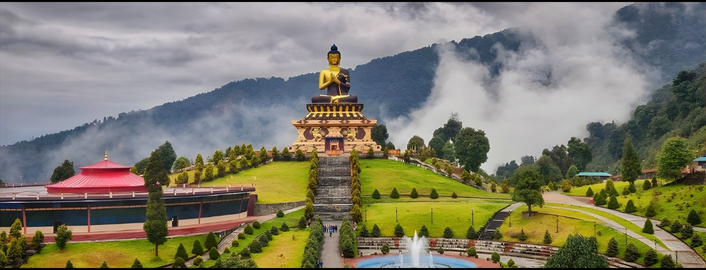
- Picture this: snow-capped peaks, lush valleys, and pristine forests. Sikkim's landscape is a canvas painted by the gods themselves.
- Kangchenjunga, the third-highest peak on Earth, stands tall here. It's like the Himalayan guardian watching over the state.
- Sikkim boasts alpine and subtropical climates, making it a biodiversity hotspot. Almost 35% of the state is covered by Khangchendzonga National Park, a UNESCO World Heritage Site.
3. **History and Royalty**:
- The Kingdom of Sikkim was founded by the Namgyal dynasty back in the 17th century. Imagine those ancient Buddhist priest-kings ruling over these misty mountains!
- During the British colonial era, Sikkim became a princely state within the Indian Empire. It maintained its protectorate status even after India gained independence.
- In 1975, after some anti-royalist protests, Sikkim decided to join India as its 22nd state. The monarchy dissolved, and the rest is history.
4. **Gangtok: The Heart of Sikkim**:
- Gangtok, the capital and largest city, is perched on the slopes of the Eastern Himalayas. It's a blend of tradition and modernity, with colorful monasteries and bustling markets.
- If you visit Gangtok, don't miss out on attractions like the Namgyal Institute of Tibetology, Tashi View Point, and Ganesh Tok. Each spot has its own story to tell.
5. **State Symbols**:
- The blood pheasant is Sikkim's official bird, the copper mahseer its fish, and the noble dendrobium its flower.
- And that iconic state highway mark? It's unmistakably Sikkim's own.
So, whether you're an adventure seeker, a nature lover, or simply someone seeking tranquility, Sikkim welcomes you with open arms. If you ever get the chance, take a deep breath of that crisp mountain air and let the magic of Sikkim envelop you!
1. **Geography and Borders**:
- Sikkim is a small state in northeastern India, bordered by some remarkable neighbors: China (specifically the Tibet Autonomous Region) to the north and northeast, Bhutan to the east, Nepal's Koshi Province to the west, and West Bengal to the south. It's like a meeting point for cultures and landscapes!
- Fun fact: Sikkim is also close to the Siliguri Corridor, which is the narrow strip of land connecting mainland India to its northeastern states.
2. **Natural Beauty and Biodiversity**:
- Picture this: snow-capped peaks, lush valleys, and pristine forests. Sikkim's landscape is a canvas painted by the gods themselves.
- Kangchenjunga, the third-highest peak on Earth, stands tall here. It's like the Himalayan guardian watching over the state.
- Sikkim boasts alpine and subtropical climates, making it a biodiversity hotspot. Almost 35% of the state is covered by Khangchendzonga National Park, a UNESCO World Heritage Site.
3. **History and Royalty**:
- The Kingdom of Sikkim was founded by the Namgyal dynasty back in the 17th century. Imagine those ancient Buddhist priest-kings ruling over these misty mountains!
- During the British colonial era, Sikkim became a princely state within the Indian Empire. It maintained its protectorate status even after India gained independence.
- In 1975, after some anti-royalist protests, Sikkim decided to join India as its 22nd state. The monarchy dissolved, and the rest is history.
4. **Gangtok: The Heart of Sikkim**:
- Gangtok, the capital and largest city, is perched on the slopes of the Eastern Himalayas. It's a blend of tradition and modernity, with colorful monasteries and bustling markets.
- If you visit Gangtok, don't miss out on attractions like the Namgyal Institute of Tibetology, Tashi View Point, and Ganesh Tok. Each spot has its own story to tell.
5. **State Symbols**:
- The blood pheasant is Sikkim's official bird, the copper mahseer its fish, and the noble dendrobium its flower.
- And that iconic state highway mark? It's unmistakably Sikkim's own.
So, whether you're an adventure seeker, a nature lover, or simply someone seeking tranquility, Sikkim welcomes you with open arms. If you ever get the chance, take a deep breath of that crisp mountain air and let the magic of Sikkim envelop you!
116 Views